
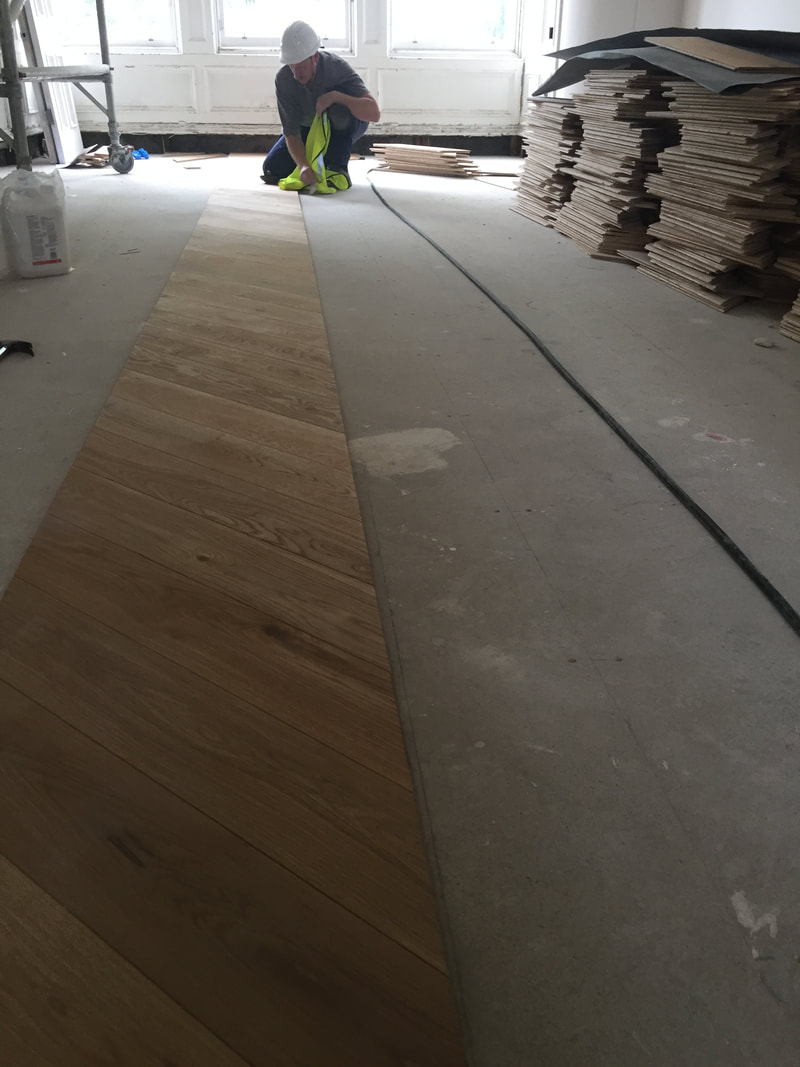
Chevron Parquet Flooring Installation
Chevron Parquet Installation Guidance
We must warn you that installing chevron parquet flooring requires significant skill, experience, and attention to detail. If not done correctly, it can lead to unsightly gaps, uneven edges, or even damage to the flooring.
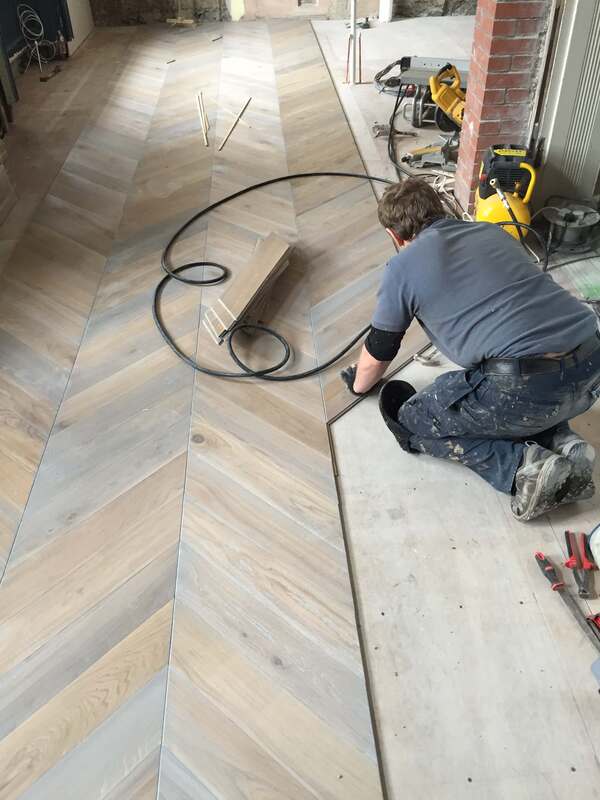
That being said, here are the step-by-step instructions for installing chevron parquet flooring using secret nails:
Glue down chevron parquet installation guidance:
In conclusion, while installing chevron parquet flooring can be a beautiful addition to any home, it is not a task to be taken lightly. It requires significant skill and attention to detail to ensure a flawless finish. If you are unsure about your ability to install chevron parquet flooring, it is best to consult a professional flooring installer.
Here is a list of tools that may be required for installing chevron parquet flooring:
It is important to note that the specific tools required may vary depending on the type of chevron parquet flooring and the condition of the subfloor. It is always best to consult with a professional flooring installer or refer to the manufacturer's installation instructions to ensure you have the correct tools and equipment for the job.
That being said, here are the step-by-step instructions for installing chevron parquet flooring using secret nails:
- Prepare the Subfloor: Ensure the subfloor is clean, level, and dry. Any unevenness or bumps should be smoothed out, and any loose or damaged boards should be replaced.
- Acclimate the Flooring: Allow the chevron parquet flooring to acclimate to the room's temperature and humidity for at least 72 hours before installation.
- Establish the Center Line: Find the center of the room and snap a chalk line from end to end. This line will serve as a reference point for the installation.
- Create the First Row: Starting from the center line, lay the first row of chevron parquet flooring, with the tongue facing outwards. Use a flooring nailer to secure the boards to the subfloor.
- Cut the Angled Pieces: Cut the angled pieces that will fit in between the first row, using a chop saw or a miter saw. Be sure to measure and cut each piece precisely, ensuring a snug fit.
- Install the Angled Pieces: Install the angled pieces, making sure they fit snugly against the first row. Use a flooring nailer to secure the pieces to the subfloor.
- Repeat the Process: Continue laying the chevron parquet flooring in rows, alternating the angled pieces with the straight pieces. Use spacers to maintain consistent gaps between each board.
- Cut the Last Row: Once you reach the opposite end of the room, you may need to cut the final row of boards to fit. Be sure to leave a gap between the last row and the wall to allow for expansion.
- Install the Skirting Boards: Once the chevron parquet flooring is installed, install the baseboards to cover the gaps between the flooring and the walls.
Glue down chevron parquet installation guidance:
- Prepare the Subfloor: Ensure the subfloor is clean, level, and dry. Any unevenness or bumps should be smoothed out, and any loose or damaged boards should be replaced.
- Acclimate the Flooring: Allow the chevron parquet flooring to acclimate to the room's temperature and humidity for at least 72 hours before installation.
- Establish the Center Line: Find the center of the room and snap a chalk line from end to end. This line will serve as a reference point for the installation.
- Spread the Adhesive: Using a notched trowel, spread adhesive on a small section of the subfloor along the center line. Only apply adhesive that can be covered by the flooring within 30 minutes.
- Lay the First Row: Starting from the center line, lay the first row of chevron parquet flooring, with the tongue facing outwards. Press down firmly to ensure a good bond with the adhesive.
- Cut the Angled Pieces: Cut the angled pieces that will fit in between the first row, using a chop saw or a miter saw. Be sure to measure and cut each piece precisely, ensuring a snug fit.
- Install the Angled Pieces: Install the angled pieces, making sure they fit snugly against the first row. Use a tapping block and a hammer to tap the pieces into place.
- Repeat the Process: Continue laying the chevron parquet flooring in rows, alternating the angled pieces with the straight pieces. Use spacers to maintain consistent gaps between each board.
- Cut the Last Row: Once you reach the opposite end of the room, you may need to cut the final row of boards to fit. Be sure to leave a gap between the last row and the wall to allow for expansion.
- Allow the Adhesive to Dry: Allow the adhesive to dry for the manufacturer's recommended time before walking on the floor or installing the baseboards.
- Install the Baseboards: Once the adhesive is dry, install the baseboards to cover the gaps between the flooring and the walls.
In conclusion, while installing chevron parquet flooring can be a beautiful addition to any home, it is not a task to be taken lightly. It requires significant skill and attention to detail to ensure a flawless finish. If you are unsure about your ability to install chevron parquet flooring, it is best to consult a professional flooring installer.
Here is a list of tools that may be required for installing chevron parquet flooring:
- Chop saw or miter saw: to cut the angled pieces of chevron parquet flooring.
- Flooring nailer: to secure the boards to the subfloor.
- Circular saw: to cut the last row of boards to fit.
- Chalk line: to establish the center line and ensure the flooring is installed straight.
- Spacers: to maintain consistent gaps between each board.
- Tape measure: to measure the length of each board accurately.
- Carpenter's square: to ensure the angled cuts are precise.
- Hammer and nails: to secure the last row of boards, if necessary.
- Safety glasses and ear protection: to protect your eyes and ears from sawdust and noise.
- Knee pads: to protect your knees while working on the floor.
It is important to note that the specific tools required may vary depending on the type of chevron parquet flooring and the condition of the subfloor. It is always best to consult with a professional flooring installer or refer to the manufacturer's installation instructions to ensure you have the correct tools and equipment for the job.
Request a quote
Tell us about your project — we usually reply within one working day. Free quotations and site visits in Edinburgh and surrounding areas.