
Wood Flooring for Tenement Flats
Quiet, flat and solid floors for Edinburgh and Glasgow tenements – with soundproofing for the flat below
Edinburgh & Glasgow tenements
Yes, you can have a wood floor in a tenement flat – if it is built properly
Tenement flats have suspended timber floors: old pine boards on joists, with your neighbour’s lath and plaster ceiling underneath. A wood floor laid straight onto them will move, creak and carry every footstep downstairs. Built in the right layers, it is quiet, flat and solid underfoot.
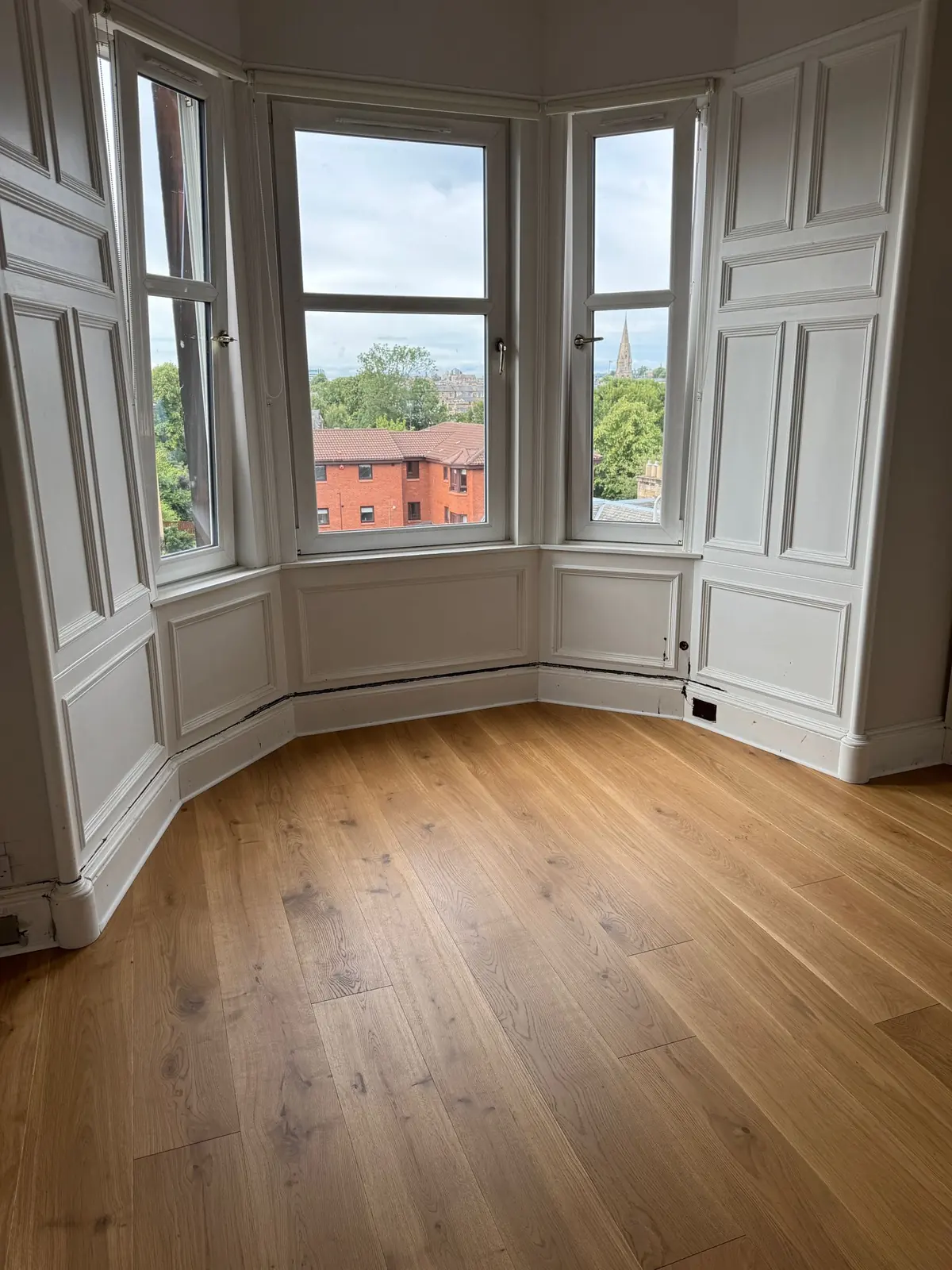
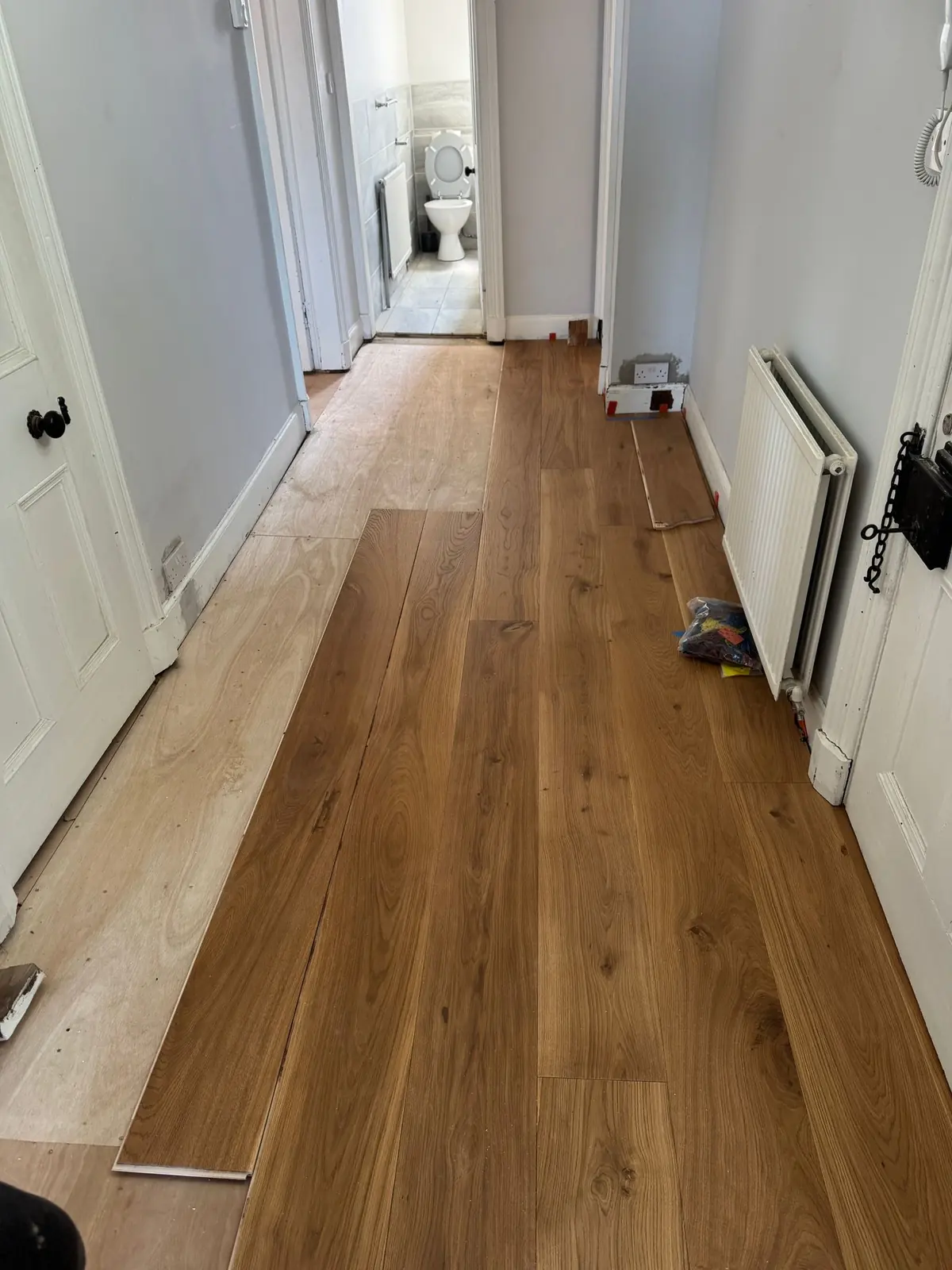
Hoff Parquet has fitted engineered oak, walnut herringbone and chevron parquet in tenement flats across Edinburgh – the New Town, Morningside, Stockbridge and the West End – and in Glasgow’s West End. We secure the boards, overlay them with birch plywood, add an acoustic layer and glue the new floor down, then trim doors and skirtings so it looks as if it was always there.
- Boards secured and levelled first
- Acoustic layer for the flat below
- Advice on title deeds and factors
- 2-year installation guarantee
Why tenement floors are different
Four things we check before we quote
Every tenement floor is a little different, but the same four questions decide how it should be built.
- 01
Movement
Pine boards on joists have often been lifted for wiring and pipes, and many have dipped over a century or more. Any movement under a new floor shows as creaks, gaps or rocking blocks – herringbone shows it most.
- 02
Noise to the flat below
Hard floors pass footsteps through joists into the ceiling below. An acoustic layer under the new floor absorbs much of that impact noise, which matters to neighbours and often to your title deeds.
- 03
Floor height
Plywood, acoustic layer and flooring together usually add 20–30mm. In one Morningside flat the build-up was 24mm, so we trimmed every door and frame on site and made bespoke thresholds to the tiles.
- 04
Original features
Cornicing, shutters and deep skirtings are part of the value of a tenement. We undercut skirtings and scribe around joinery rather than ripping it out, and we overlay the original boards instead of removing them.
How we build it
A quiet tenement floor, layer by layer
The order matters. An acoustic layer cannot work on a floor that moves, and a pattern like herringbone exaggerates every dip, so we always stabilise first, then level, then add acoustics, and only then lay the floor.
We fully glue engineered boards or parquet blocks to the prepared base. A glued floor feels solid, does not drum and stays flat in Scotland’s changing humidity. Where a floating floor suits the room better, we lay it over a matched acoustic underlay instead.
We choose the acoustic layer for the floor type and build-up height, and give you its technical data sheet – useful if your factor or neighbours ask what has gone under the floor. More detail is on our soundproofing for wood flooring page.
The process
From survey to finished floor
- 01
Survey
We lift a board where possible, check joists and level, measure floor heights at every door, and ask what your title deeds say.
- 02
Secure
Loose boards are screwed down, squeaks fixed, damaged boards replaced and high spots planed.
- 03
Overlay
Birch plywood is screwed down at close centres to give a flat, rigid base; latex levelling where needed.
- 04
Acoustic layer
A layer suited to glue-down or floating floors is laid over the plywood.
- 05
Fit and finish
The floor is glued down, doors trimmed, skirtings undercut and thresholds made to match.
Title deeds, factors and permissions
Many tenement title deeds and deeds of conditions include rules about floor coverings and noise between flats. Some require carpet or an approved acoustic underlay in upper flats. Check yours before you choose a floor – your solicitor or the Registers of Scotland can provide a copy – and tell your factor about the work.
Replacing the floor finish in an existing flat does not usually need a building warrant. Scottish building standards on sound insulation apply to new flats and to conversions, so if your floor is part of a conversion or a bigger renovation, your architect or builder will tell you what is needed.
A lot of Edinburgh’s New Town and Old Town is listed. Overlaying the original boards, rather than lifting them, keeps the historic floor in place. If you are unsure, ask the council before you start.
Which wood floor suits a tenement?
| Floor | Tenement fit |
|---|---|
| Engineered oak planks | Our first choice – stable, glued down, wide boards available |
| Herringbone and chevron | Excellent on plywood; the classic look for period flats |
| Solid wood | Possible, but moves more with humidity |
| Restoring the original pine | Lovely, but adds no acoustic layer – see floor sanding |
Want to see the options side by side? Visit our Morningside showroom.
Tenement projects
Tenement floors we have fitted
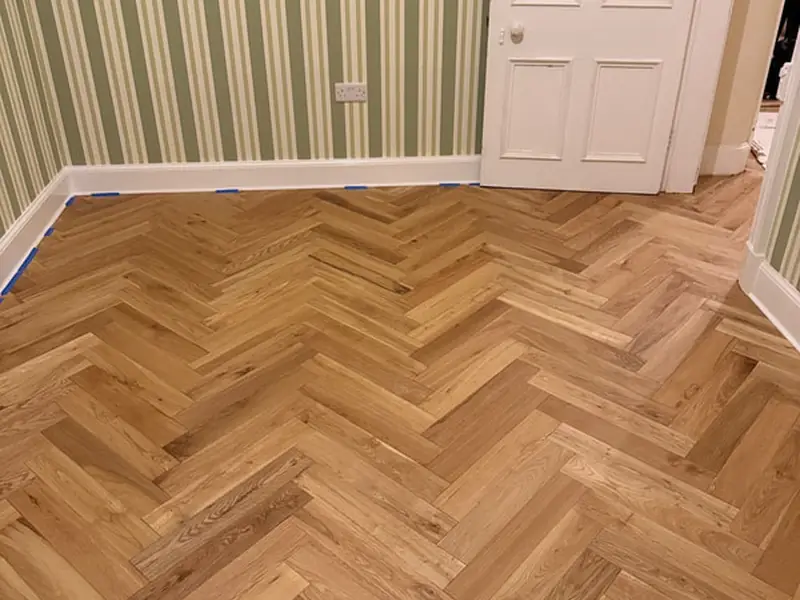
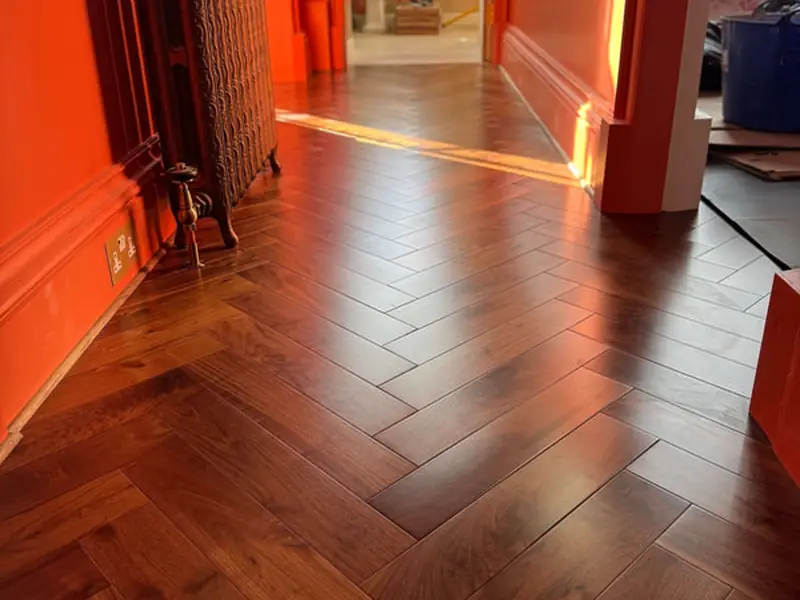
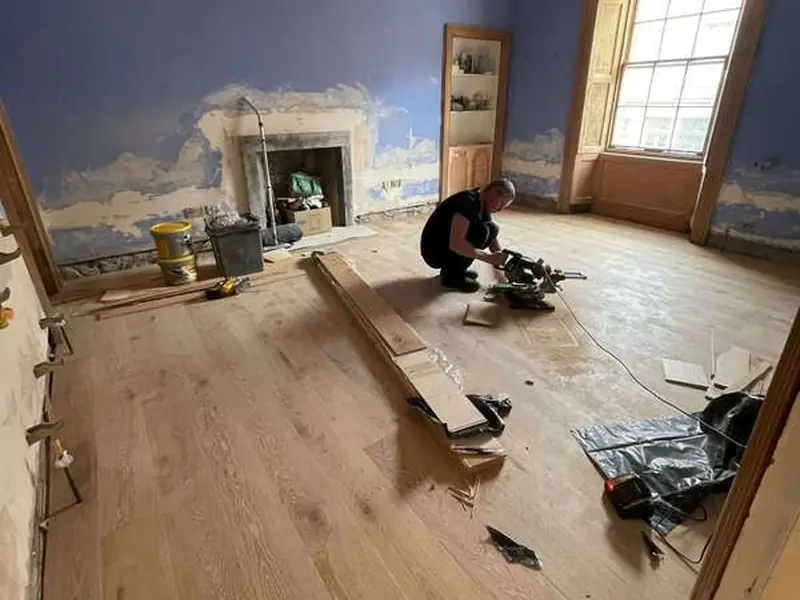
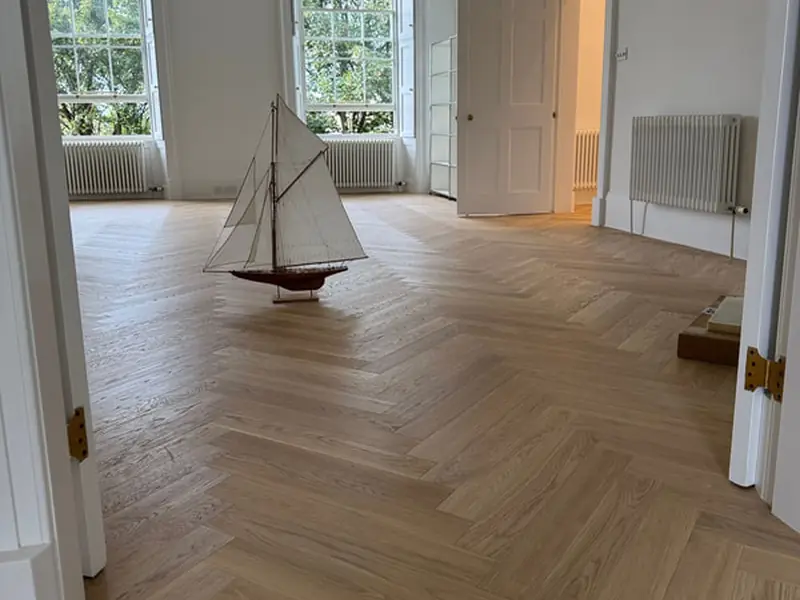
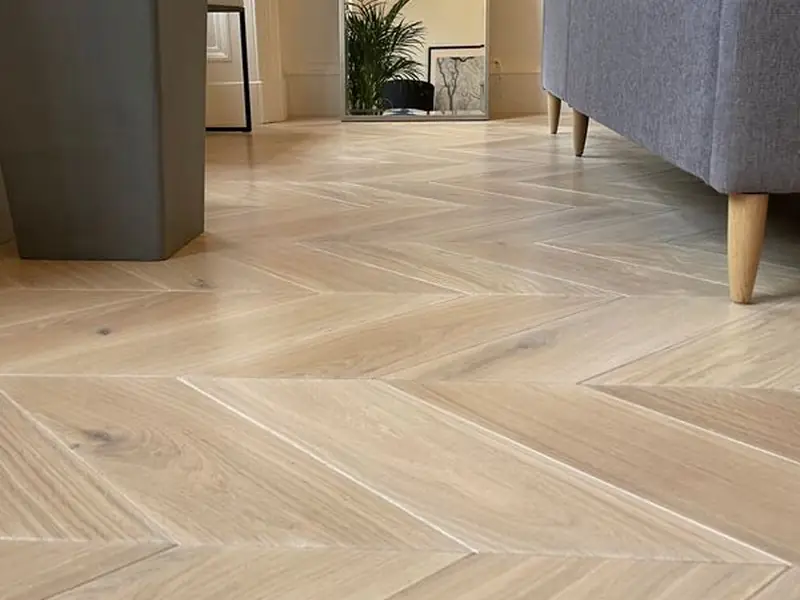
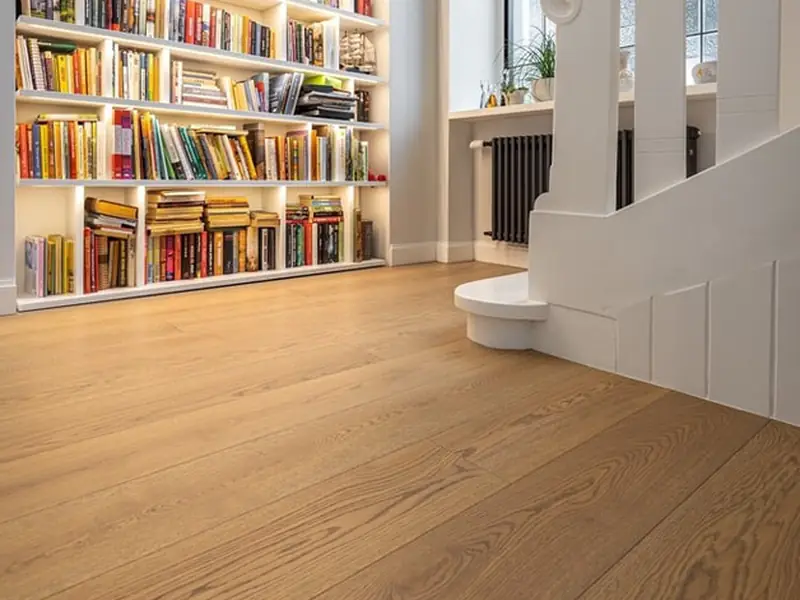
Real tenement and period-flat projects. Each one shows the subfloor work and the finished floor.
Frequently asked questions
Can I put a wood floor in a tenement flat?
Yes. Secure the existing boards, overlay them with plywood, add an acoustic layer and glue an engineered floor or parquet down. Built this way, a wood floor in a tenement is flat, solid and much quieter for the flat below than boards laid straight on the joists.
Do I need soundproofing under a wood floor in a tenement?
Usually, yes – especially in upper flats. Many title deeds and factors expect hard floors to have an acoustic layer, and it is the considerate thing to do for neighbours below. We include it in the quote and give you the product data sheet.
Do I need permission to fit wood flooring in my flat?
Replacing a floor finish in an existing flat does not usually need a building warrant, but your title deeds may set rules on floor coverings, and listed buildings may need advice from the council before original fabric is removed. Check your deeds and tell your factor before work starts.
How much higher will my floor be?
Plywood, acoustic layer and flooring usually add about 20–30mm. We measure at every door during the survey and include trimming doors, undercutting skirtings and making thresholds in the quote.
Can herringbone parquet go in a tenement?
Yes – herringbone and chevron suit tenements beautifully. Because the pattern shows any dip, we always overlay the old boards with plywood screwed at close centres and level it before gluing the blocks down.
Can you keep my original skirtings and cornicing?
Yes. We undercut skirtings so the new floor slides beneath them and scribe around joinery, so period features stay untouched.
Is engineered or solid wood better for a tenement?
Engineered wood. Its plywood base keeps it stable when humidity changes between Scottish winters and summers, and it bonds well to a plywood overlay. Solid wood can work but moves more.
Where do you fit tenement floors?
Across Edinburgh – including the New Town, Old Town, Marchmont, Bruntsfield, Morningside, Stockbridge, Leith and the West End – and in Glasgow’s West End, Southside and city centre, plus Dundee and other Scottish towns.
Visit or call us
37 Comiston Road, Morningside, Edinburgh EH10 6AB0131 385 7779
✉ info@hoffparquet.co.uk
Showroom opening hours
Monday – Friday: 10am – 5pm
Saturday & Sunday: by appointment only
Please give us a call or send us an email before visiting our Edinburgh wood flooring showroom, as we may occasionally be out serving clients at their homes or project sites.
Request a quote
Tell us about your project — we usually reply within one working day. Free quotations and site visits in Edinburgh and surrounding areas.